

 Unmanned aerial vehicles (UAVs) and drones require reliable, advanced infrared (IR) imaging systems that provide high-resolution vision while meeting precise performance and weight requirements for these devices. This includes designing and assembling optical components that meet criteria for size, weight, and power consumption.
OSE Optics works to ensure that infrared optics systems meet your application’s needs through advanced metrology workflows that maximize reliability and precision at every stage. From initial validation to deployment, we aim to provide you with a solution that truly works. In this blog post, we’ll explore the key components of advanced IR systems, and their uses in drone and UAV applications.
Key Components of Advanced IR Systems
The following are some critical components of infrared lens design for UAVs and drones:
Specialized Materials
The types of materials you select will factor into the design of UAV and drone lens components, making sure the vehicle meets optical requirements while remaining lightweight. Aspherical lenses are often ideal in infrared optics applications because of their improved performance compared to spherical lenses.
Optimized Coatings
Another consideration in UAV and drone lens assemblies is the coatings used. Advanced IR systems benefit from anti-reflective lens coatings that boost optical performance without significantly affecting the size or weight of the device.
Through the use of specialized manufacturing processes, it’s possible to make fully customized coatings for each intended application. A military drone, for instance, might require a coating that can withstand extreme temperatures across different outdoor environments.
Optomechanical Integration
Optomechanical engineering can maximize system accuracy and precision at the submicron level. Designing and testing optomechanical integrations can help to achieve some of the tightest tolerances, often through the use of an optical bench. Alternatively, optomechanical engineering can help facilitate the motion of optical components, such as multi-axis gimbaled materials.
OSE Optics has the capabilities to put together an advanced infrared lens design and other optics components through our optomechanical engineering and advanced metrology services.
Applications of Advanced Optical Assemblies
There are numerous applications for advanced optics systems on drones and UAVs. Common uses involve visible and thermal imaging for tasks ranging from structural integrity checks to crop health monitoring and search and rescue.
Fiber optics can be utilized for secure and high-bandwidth communications, often through tethered drones for applications like urban surveillance and disaster response.
Advanced IR Optical Assemblies From OSE Optics
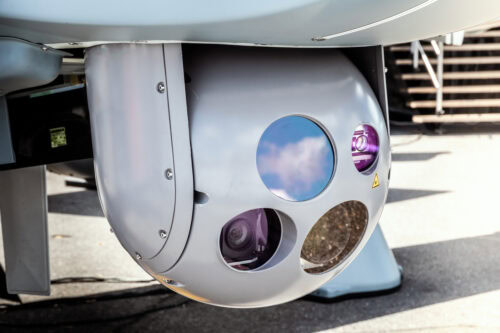 If you’re seeking highly durable UAV or drone lens designs that meet your precise specifications, OSE Optics has the experience and resources to provide you with the right custom assembly. To make sure you get the results you need from each solution, we use advanced metrology services that accurately measure component performance, confirming that the final design meets our customers’ and their application’s strict safety and quality standards.
In addition to UAV and drone optics systems, we provide solutions for a range of applications in the defense and aerospace, medical, life sciences, and industrial sectors.
To speak with one of our experts, contact us today, or get started on a custom system by requesting a quote.